Understanding Urine Tests for BAC
📅 2026 Update: Recent Changes in DUI and BAC Laws
Since the original article was published, several important updates have emerged regarding DUI and BAC laws across the United States. These changes impact drivers, especially concerning blood alcohol concentration (BAC) limits and penalties. The earlier article continues below this update for more foundational information on urine tests for BAC.
🥂 Utah's BAC Limit Reduction
Utah is notable for lowering its legal BAC limit to 0.05% in 2018, making it the first state to do so. This change emphasizes the state's focus on road safety, aiming to reduce alcohol-related accidents. Other states have not followed suit yet, but the National Transportation Safety Board (NTSB) has pushed for all states to adopt a similar limit since 2013.
🚦 Implied Consent Agreement
When individuals obtain their driver's licenses, they agree to chemical testing if arrested for DUI. This includes breath, blood, or urine tests to measure BAC. This agreement is crucial in DUI cases, as refusal can lead to automatic penalties.
⚖️ Refusal Consequences
Refusing a breathalyzer test after a DUI arrest leads to penalties varying by state. Typically, this results in an automatic license suspension, which can last from 30 days to two years for a first refusal. Understanding these consequences can help drivers make informed decisions during a traffic stop.
📅 License Reinstatement Process
The timeline and process for reinstating a driver’s license after suspension due to a refusal of a breathalyzer test can differ from state to state. It’s important for individuals to know the specific requirements in their state for a smoother reinstatement.
📌 Key Points Summary
- Utah's BAC limit is now 0.05%.
- Implied consent means agreeing to tests when obtaining a license.
- Refusal of breathalyzer tests leads to license suspension.
- Reinstatement processes vary by state.
- Always check specific state laws for accurate information.
💡 Tips for Navigating DUI and BAC Laws
Review your specific situation with your attorney for tailored information and strategies.
🚗 Know Your State's BAC Limits
Each state has different BAC limits for drivers. Understanding these limits is essential to avoid penalties, especially if traveling across state lines.
👶 Underage Drinking Laws
All 50 states enforce zero-tolerance laws for underage drivers. The BAC limit for those under 21 is 0.02% or lower. Knowing these laws can help young drivers make safer choices.
🚛 Commercial Driver Regulations
For commercial drivers, the federal BAC limit is 0.04%. Being aware of this stricter standard can help these drivers avoid serious legal issues.
⏳ Consequences of Refusing Tests
Refusing to take a breathalyzer test can lead to immediate license suspension. It's critical to understand these consequences before making a decision during a DUI stop.
🏁 Be Aware of NTSB Recommendations
The NTSB has recommended that states adopt a BAC limit of 0.05% or lower. Keeping up with these recommendations can provide insights into possible future legal changes.
🏆 Top Services for Legal Document Preparation (Ranked by User Reviews 2026)
This section covers services that assist with legal document preparation related to DUI and BAC issues. These services can provide help with forms and legal documents necessary for navigating DUI cases. The order is based on Trustpilot data checked in October 2026, and while star ratings are informative, they are only one aspect of customer feedback.
🥇 1. LegalNature
LegalNature has been rated 4.5. This service is known for its legal document preparation and affordable legal forms, which can be useful for individuals facing DUI-related legal matters. However, some users have reported unexpected costs, so it’s wise to review all fees before proceeding.
🥈 2. Notarize
Notarize holds a score of 4.5. It is recognized for its 24/7 online notary services, making it convenient for those needing documents notarized quickly, which can be crucial in DUI cases. Some reviewers mention facing unexpected costs during their experience, so users should be aware of potential fees.
🥉 3. Document Genius
Document Genius has a score of 4.0. It is known for its easy-to-use document creation tools for contract and form generation, which can assist in preparing legal documents related to DUI cases. Some users have found the tool not suitable for their needs, highlighting the importance of understanding its capabilities before use.
🆓 Free Government Resources
The National Highway Traffic Safety Administration (NHTSA) offers resources and information on DUI laws and penalties. Additionally, state DMV websites provide information on driver's license reinstatement procedures and requirements at no cost.
🔎 Choosing the Right Legal Service
- ⭐️ Trustpilot ratings and review counts.
- 📄 Types of documents offered related to DUI.
- 💲 Cost structures and potential hidden fees.
- ⏱️ Availability and hours of service.
- 🛠️ User-friendly tools for document creation.
❓ Frequently Asked Questions
❓ What happens if I refuse a breathalyzer test?
Refusing a breathalyzer test can lead to an automatic license suspension, which varies by state. The suspension period typically ranges from 30 days to two years for a first refusal.
🏷️ Are breathalyzer results always accurate?
Breathalyzer results are admissible in court if the device was properly calibrated and operated by a certified individual. Accuracy is vital in DUI cases.
🚦 How do zero-tolerance laws work?
Zero-tolerance laws apply to drivers under 21, with a BAC limit of 0.02% or lower in all states. Violating these laws results in penalties regardless of impairment level.
🚗 What should I do immediately after a DUI arrest?
After a DUI arrest, it is important to understand your rights and responsibilities, including the implications of refusing a breathalyzer. Consulting legal resources can provide clarity on next steps.
📅 Can I get my license back after a DUI conviction?
Yes, you can get your license back after a DUI conviction, but the process and timeline for reinstatement vary by state. It is essential to follow state-specific procedures.
⚖️ What is the BAC limit for commercial drivers?
Federal regulations prohibit commercial drivers from operating vehicles with a BAC of 0.04% or higher. Awareness of this limit is crucial for maintaining a commercial driving license.
⚖️ Recent Court Cases Related to DUI
Recent court rulings have clarified various aspects of DUI laws, including the treatment of breathalyzer refusals and the enforcement of BAC limits. These rulings can influence how DUI cases are prosecuted and defended.
- Texas Court affirms DWI convictions for Callie LonsfordTexas Court of Appeals, 13th District · August 13, 2026
- Texas Court upholds DWI conviction of Steven DanielTexas Court of Appeals, 2nd District (Fort Worth) · August 6, 2026
- Texas Court upholds DWI conviction of Cameron WheatonTexas Court of Appeals, 13th District · August 6, 2026
- Texas Court upholds DWI conviction of Juan David SanchezTexas Court of Appeals, 9th District (Beaumont) · August 5, 2026
For more insights into recent rulings, visit the news section for recent updates.
End of October 2026 Update
Due to the inaccuracies in breathalyzer tests, more tests are available to be able to determine a correct blood alcohol concentration. These tests can confirm or contradict BAC readings from a breathalyzer, and may help or further incriminate an individual. One of these tests is the urine alcohol test.
Urine tests for alcohol function by testing for ethyl glucuronide in urine. Ethyl glucuronide is an ethanol alcohol that would be present in a urine sample of a person that has consumed an alcoholic beverage. Depending on the drinking patterns or behaviors of an individual, alcohol can be tested as far back as a week (and sometimes longer for a heavy drinker such as an alcoholic). This doesn't mean that if you drank on Saturday and got tested for urine at work on Monday that you'd be subject to being accused of drinking on the job. The longer time that passes with the alcohol in your system causes less to show, and the urine dilutes it as well.
Some employers choose to test their employees for alcohol ( in addition to or in place of drug testing) to be able to check if an employee has broken company guidelines. When detecting for alcohol, a urine alcohol test would show that alcohol was used within an 80 hour time period from the test, for a positive reading. Most employers that conduct alcohol urine tests, perform these tests at random. This prevents the employees from "preparing" for the test, such as abstaining from drinking for a certain time period, to provide negative results. Another use of urine alcohol tests is by parents testing their children. This may sound rare, but it actually is very common. There are kits available for home testing that provide parents to test their children to make sure they have not been drinking underage.
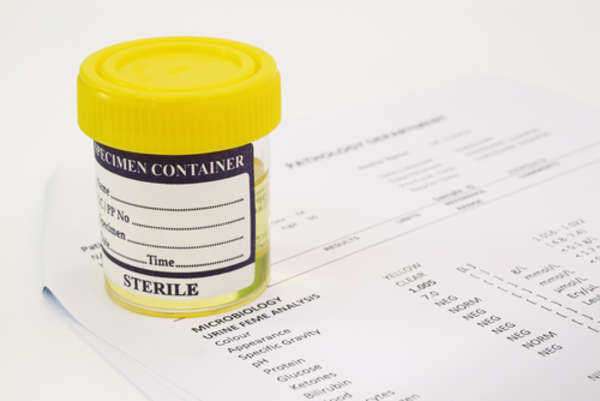
Because of easy accessibility to these tests, more and more parents are testing their children to keep them from trying to drink, or to confirm a suspicion. Adults can't escape these tests either, spouses, relatives, and friends are sometimes subject to these tests by loved ones if they are trying to abstain from alcohol. For example a family member may conduct this test on a recovering alcohol trying to remain sober. These tests may be part of the rehab protocol in addition to their testing, or just a suggestion to assist the person on their journey.
The most common use for urine alcohol testing is by law enforcement agencies after an individual has been arrested for Driving Under the Influence. These tests usually follow a breathalyzer test either at the police station or a hospital. They combine with a breathalyzer to assist in giving a genuine reading of a person's BAC level.
Urine alcohol tests are widely used by different organizations, groups, and people as a single or added measure of testing for alcohol in the urine of a human being. These tests have become more common over the years, and the means for testing have developed into more convenient kits that one can even use at home. This allows for almost anyone to monitor alcohol in a person's body, and determine whether that person has broken any rules, laws, or regulations.