All You Need To Know About The Origins Of Breathalyzer
📅 2026 Update: Recent Changes in DUI and DWI Laws
Since the original article was published, there have been significant changes in DUI and DWI laws. Notably, some states are now adopting stricter BAC limits and implementing new penalties for drivers. The earlier article continues further down the page for more foundational information.
🚦 Utah's BAC Limit Reduction
In 2018, Utah became the first state to lower its legal blood alcohol concentration (BAC) limit to 0.05%. This change is part of a broader movement to improve road safety. Lower limits may lead to fewer accidents and fatalities related to impaired driving.
📜 NTSB Recommendations
The National Transportation Safety Board (NTSB) has been advocating since 2013 for all states to adopt a per se BAC limit of 0.05% or lower. This recommendation aims to encourage states to reconsider their laws regarding drunk driving. Following this guideline could enhance road safety across the nation.
🔒 Implied Consent and Refusal Consequences
When individuals obtain a driver's license, they agree to an implied consent agreement. This means they must submit to chemical testing if lawfully arrested for DUI. Refusing to take a breathalyzer test usually results in an automatic license suspension, which can vary widely by state.
⏳ License Suspension Duration
The duration of license suspension for refusing a breathalyzer test can range from 30 days to two years for a first refusal. Each state has its own rules, so it's crucial for drivers to understand the potential consequences of refusing a test at the time of arrest.
📌 Key Points Summary
- Utah's BAC limit is now 0.05%.
- NTSB recommends a 0.05% BAC limit for all states.
- Implied consent laws require chemical testing upon arrest.
- Refusal to take a breathalyzer leads to license suspension.
- Suspension lengths vary from 30 days to two years.
💡 Tips for Navigating DUI and DWI Situations
Review the details of your specific situation with your attorney to understand your options.
🚧 Understand Zero-Tolerance Laws
All 50 states enforce zero-tolerance laws for drivers under 21. These laws set BAC limits at 0.02% or lower. Young drivers need to be aware that any alcohol can lead to severe penalties.
🚌 Know Commercial Driver Regulations
Commercial drivers face stricter regulations. Federal rules prohibit operating vehicles with a BAC of 0.04% or higher. It’s essential for commercial drivers to be aware of these limits to avoid losing their licenses.
📝 Prepare for License Reinstatement
The process for reinstating a driver's license after suspension can differ by state. Drivers should familiarize themselves with the specific requirements and timelines for reinstatement. This knowledge can help reduce confusion and frustration later.
🔍 Be Aware of Refusal Penalties
Refusing a breathalyzer test can lead to serious consequences. Drivers should understand that refusal does not prevent DUI charges. Prosecutors can use other evidence of impairment to build their case.
📊 Check Breathalyzer Test Accuracy
Breathalyzer test results are only admissible in court if the device is properly calibrated. If the device was not maintained correctly, the results may be questioned. Individuals should be aware of this when considering their legal options.
🏆 Top Services for DUI and DWI Legal Assistance Ranked by User Reviews (2026)
This section highlights services related to legal documentation and notary needs that can support individuals facing DUI or DWI charges. The order is based on Trustpilot data checked in October 2026. Scores can change over time, and it’s important to note that star ratings reflect customer experiences, with unhappy customers often posting more reviews.
🥇 1. Notarize
Notarize holds a Trustpilot score of 4.5. This service is known for providing online notary services, allowing users to notarize documents anytime. Many users appreciate the convenience of 24/7 availability.
However, some have reported unexpected costs associated with the service, so users should be aware of potential fees.
🥈 2. LegalNature
LegalNature also has a Trustpilot score of 4.5. It specializes in legal document preparation and offers affordable legal forms. Reviewers often highlight its user-friendly platform.
Similar to Notarize, some users have mentioned unexpected costs, which could be a consideration for those looking to save on legal expenses.
🥉 3. Document Genius
Document Genius has a Trustpilot score of 4.0. Known for its easy-to-use document creation tools, it allows users to generate contracts and forms quickly. While many find it suitable for their needs, some users reported that the tool may not meet all their specific requirements.
Prospective users should evaluate whether it fits their situation.
🆓 Free Government Resources
The National Highway Traffic Safety Administration (NHTSA) offers resources and information on DUI laws and penalties. Additionally, state DMV websites provide details on driver's license reinstatement procedures and requirements. These resources can be valuable for individuals seeking to navigate the complexities of DUI laws without incurring extra costs.
🔎 Key Comparison Factors
- Trustpilot ratings for user experiences.
- Cost structures, including hidden fees.
- Types of services offered, especially related to DUI laws.
- User reviews discussing reliability and ease of use.
- Availability of customer support for assistance.
❓ Frequently Asked Questions
❓ What is the legal BAC limit in Utah?
In Utah, the legal BAC limit is 0.05%. This is the lowest limit in the nation and applies to all drivers.
⏳ How long can my license be suspended for refusing a breathalyzer?
The duration of license suspension for refusing a breathalyzer varies by state. Typically, it can range from 30 days to two years for a first refusal.
🚦 What happens if I refuse a breathalyzer test?
Refusing a breathalyzer test usually results in an automatic license suspension. This does not prevent DUI charges, as prosecutors can still use other evidence of impairment.
🏢 Are there different rules for commercial drivers concerning BAC?
Yes, commercial drivers must adhere to stricter regulations. They are prohibited from operating vehicles with a BAC of 0.04% or higher.
📝 What is an implied consent agreement?
An implied consent agreement means that by obtaining a driver's license, individuals agree to submit to chemical testing if lawfully arrested for DUI. This agreement is crucial for enforcing DUI laws.
🌐 Where can I find more information about DUI laws in my state?
State DMV websites provide detailed information about DUI laws, penalties, and license reinstatement procedures. These resources are essential for understanding your legal obligations.
⚖️ Recent Court Cases on DUI and DWI
Recent court rulings have highlighted how different states interpret and enforce DUI laws. Understanding these rulings can provide insight into your rights and obligations regarding DUI charges.
- Georgia Court of Appeals rules on Shawn Jones' DUI caseCourt of Appeals of Georgia · June 18, 2026
- Court upholds DUI conviction, denies suppression motionCourt of Appeals of Virginia · June 23, 2026
- Georgia Court Affirms Dismissal of DUI Charge Against MorrisCourt of Appeals of Georgia · June 25, 2026
- Court Reduces DWI Charge for Antoine Taylor in New YorkNew York Supreme Court, Queens County · December 11, 2025
Explore more recent rulings in the news section: more rulings on the news page.
End of October 2026 Update
A breathalyzer is a breath analyzing device that is used to give an estimate of the BAC level (Blood Alcohol Content) of a breath sample. Breathalyzers were traditionally used by law enforcement to determine the BAC of a driver determining whether or not he was drunk while operating a vehicle. Since then, the device has evolved into much more practical ones, and made by several manufacturers.
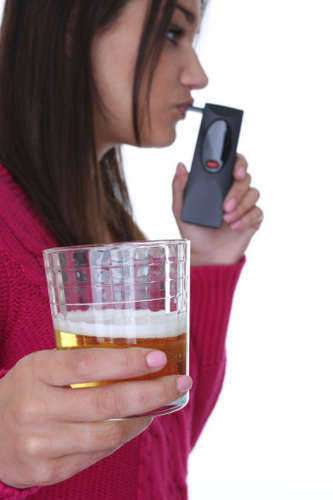
Evidence of alcohol testing can go back over a century, but the recorded first chemical texts of alcohol intoxication were conducted in 1937 by Rolla N. Harger, a professor at Indiana University.. Professor Harger was credited with introducing the Drunkometer in 1938 which was the first device invented for the testing of alcohol on a person's breath.
The downside to this device was that it needed to be re-calibrated when it was moved from one place to a different one. Professor Robert Borkenstein, also of Indiana University, was responsible for inventing the Breathalyzer which served the same purpose, but was much more practical and didn't require the same maintenance. Breathalyzer models since then have gone through a series of changes. The original manufacturer for the police used breathalyzers was the famous gun manufacturer, Smith & Wesson. The company later sold the product to another company, and since then others have joined on the production front. The units themselves have gotten smaller in size so that officers can transport them in their vehicles and administer breathalyzer tests on the spot.
Breathalyzers have been a great tool for officers to be able to confirm if a driver is driving under the influence of alcohol. It provides a way without invading their privacy/body such as drawing blood or urine, for them to be able to determine the person's BAC. Measuring the blood alcohol level through breath has been such a great advancement since early tests and models, and an essential part of law enforcement. This is not where breathalyzers serve their only purpose though. In the past two decades, portable breathalyzers have hit the market in abundance and more efficient and accurate models with time. Personal breathalyzers can help a pertain test their BAC level on their own, in accordance to their state limit, and be able to judge whether to drive home or not.
They serve as a great aid for those responsible individuals who want to make sure they haven't had a drink too many prior to hitting the road. Sometimes people feel absolutely fine when getting in a vehicle and are capable of driving home, but they do not realize their BAC level may be above the legal limit and if they get pulled over and tested, they could end up in jail. Having a personal breathalyzer can help dodge a situation like that, and ending up in more trouble later.
Since the creation of the first breathalyzer, models have become more accurate and trustworthy. The legitimate personal models are approved by the Food and Drug Administration to confirm the product does its function. These devices have come along way and are a large part to the improvement of society(personal breathalyzer), and the incrimination of those in violation of drunk driving (law enforcement breathalyzers).